
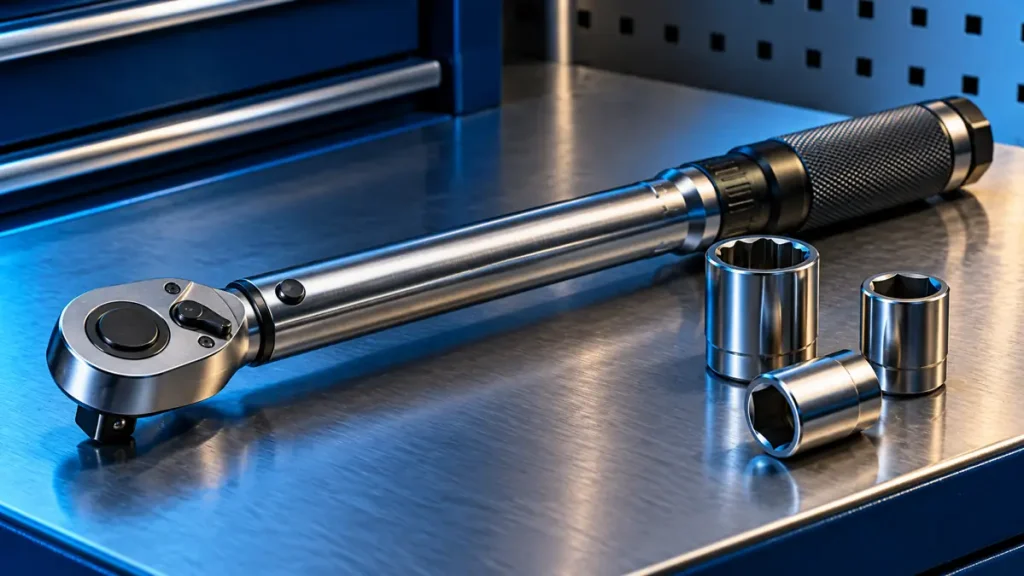
A torque wrench is selected to apply controlled torque to a threaded joint, but a fastener’s printed value alone does not define the tool requirement. The target must come from joint design, fastener data and the approved process. Then select range, wrench type, drive, access and calibration control for that task.
Match the working range to the target torque
Obtain the minimum and maximum required values from the assembly procedure or responsible engineer. Choose a wrench that covers the target within the maker’s recommended working region; if the work spans widely separated values, more than one tool may be appropriate. Norbar’s selection FAQ gives 20–80% of rated capacity as a general guideline for a target value, but the range and accuracy of the specific model must be verified in its own data sheet and instructions. See Norbar’s torque-tool FAQ.
| Selection point | Question to answer |
|---|---|
| Target torque | Which approved method specifies the value and tolerance? |
| Tool range | Does the target fall in this model’s stated working range? |
| Drive and access | What socket size and working clearance are available? |
| Documentation | Is calibration certification or result recording required? |
Choose mechanical or digital feedback for the process
Click, beam, digital and specialist tools provide different feedback. Consider duty cycle, visibility of a display, data capture, environment and operator training. Match the drive to the socket and connection. Where access is limited, check tool length and movement space on the actual joint; an extension or adapter may change the method and the maker’s requirements.
Calibration is not the same as a quick check
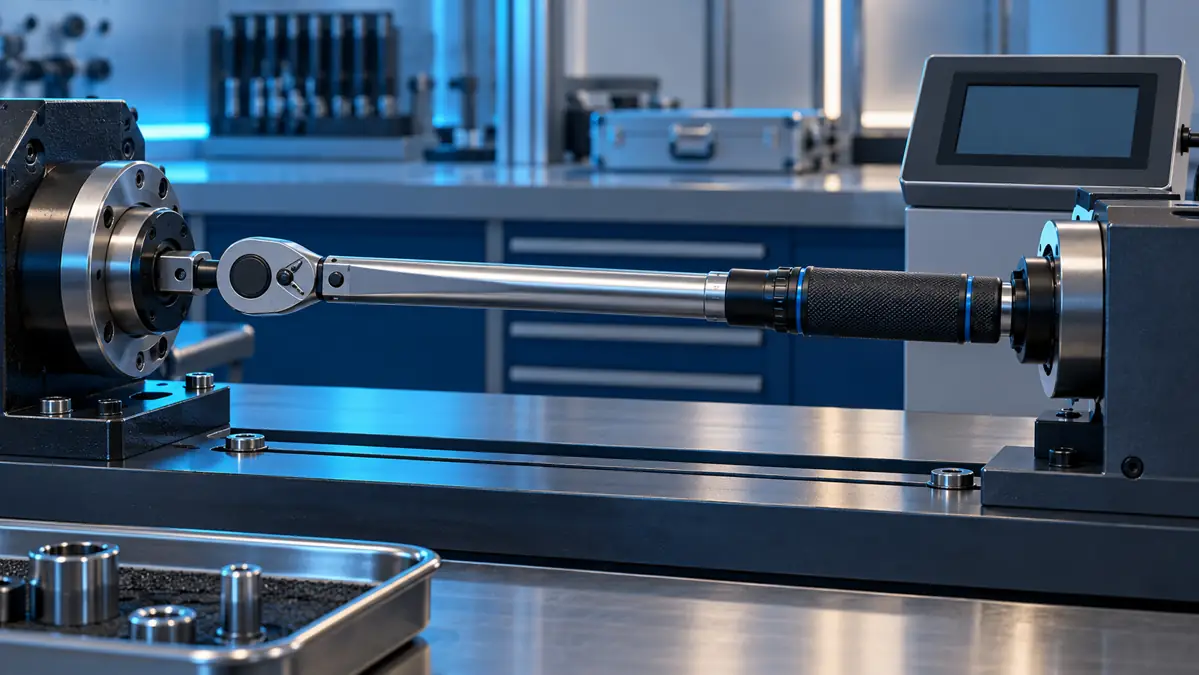
A periodic function check can indicate tool condition, while calibration and adjustment against a defined procedure are more specialised. Agree traceability, internal standards, cycle count, joint criticality and storage conditions with the quality team. Norbar describes calibration as a controlled comparison of wrench readings with a torque tester; see its guide to checking and calibration. Do not copy one generic calibration interval; follow the organisation’s procedure and the maker’s guidance.
Torque wrench selection for the real joint
When an assembly has several joints, record each target, tolerance, access tool and tightening sequence from the approved procedure. If a nominal value is all you have, ask the joint designer or equipment maker about lubrication, fastener material and grade, and required preload before choosing a torque wrench. These factors can affect the relationship between applied torque and clamp load; we do not infer a setting from bolt size alone.
Match the torque wrench drive to the socket and the handle’s working clearance. If an extension or adapter is used, check whether the maker specifies a correction method or limitation. The tightening procedure should state the number of steps, sequence and completion record; the right wrench does not replace an approved joint process.
Use and store the wrench as its manual describes
- Before use, check range, units, direction and tool condition.
- Use a suitable, undamaged socket and a consistent operating method.
- After use, reset and store the tool as the specific manual instructs.
- Record impact, overload or a drop; do not use a tool if its condition is uncertain.
- Log tool identity, check date and responsible operator in quality records.
What information is needed for a torque wrench enquiry?
Send torque range and units, joint type, drive size, access, usage frequency, feedback type, certificate requirements and preferred model or origin. Do not guess the joint’s required torque; ask the equipment maker or responsible engineer if it is unknown. These details help with a torque wrench sourcing enquiry.
Frequently asked questions about torque wrenches
Does every wrench have the same accuracy across its full scale?
That depends on the model and its stated specification. Read the tool’s accuracy range and test conditions in the manufacturer documentation.
Does a torque checker replace calibration?
Not necessarily. A quick check and calibration may have different purposes and traceability. Confirm the required quality procedure and certificate.
Technical references
- Norbar — Torque tool selection FAQ
- Norbar — Checking and calibration of torque wrenches
- Norbar — Torque calibration laboratory
Practical selection checks
Choose range, drive and measurement type from the assembly instruction. Confirm model accuracy and calibration requirements; follow the maker’s use and storage guidance.
Browse the industrial tool catalog or send a technical enquiry.
Additional selection checks
Choose the wrench range and drive from the assembly instruction. Confirm model accuracy and calibration needs; follow the manufacturer’s use and storage guidance.
Browse the industrial tool catalog or send a technical enquiry with the exact code and application.
Use this guide for initial understanding and comparison. For operating limits, safety and exact settings, follow the manual and datasheet for the specific tool model and your workplace procedures.